
Metro Atlanta Lawn Troubleshooting
Shade Damage to Your Lawn
Learn how limited sunlight affects Bermuda, Zoysia, and Fescue, and what to do when grass repeatedly thins beneath trees or beside buildings.

Metro Atlanta Lawn Troubleshooting
Learn how limited sunlight affects Bermuda, Zoysia, and Fescue, and what to do when grass repeatedly thins beneath trees or beside buildings.
Sunlight Matters
Turfgrass uses sunlight to produce the energy needed for roots, leaves, and new growth. When a lawn receives less light than the grass requires, it gradually loses density. Blades may become longer and thinner, bare soil begins showing, and weeds or moss can move into the weakened area. Shade also changes the growing environment. Soil beneath trees may remain damp longer after watering, while tree roots compete with grass for moisture and nutrients. Limited air movement can increase disease pressure, and repeated foot traffic causes more damage because shaded turf recovers slowly.
Fertilizer, weed control, or additional seed cannot permanently correct a lack of sunlight. The site must be improved or adapted to what can realistically grow there.
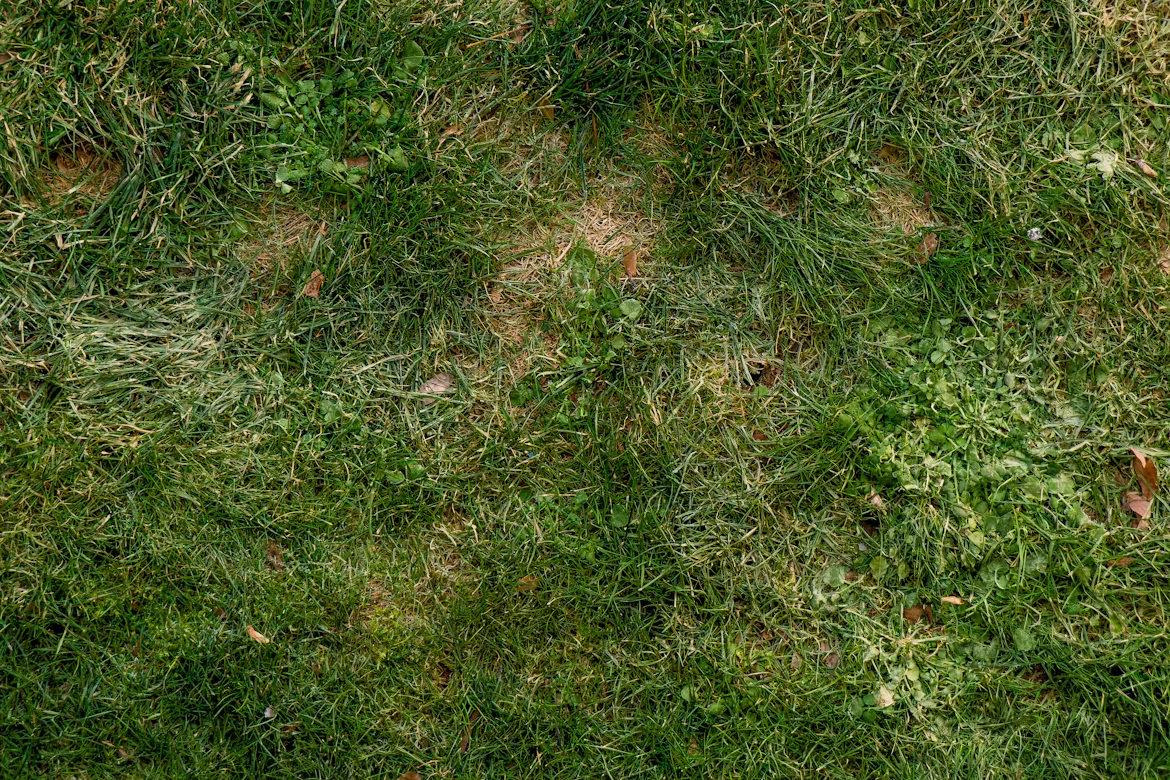
Recognize the Pattern
Common signs include:
Shade damage is often gradual. A lawn may have performed well several years ago but decline as tree canopies expand or new construction changes its sun exposure.
Before assuming shade is the only cause, check irrigation coverage, drainage, soil compaction, insects, disease, and mowing practices.
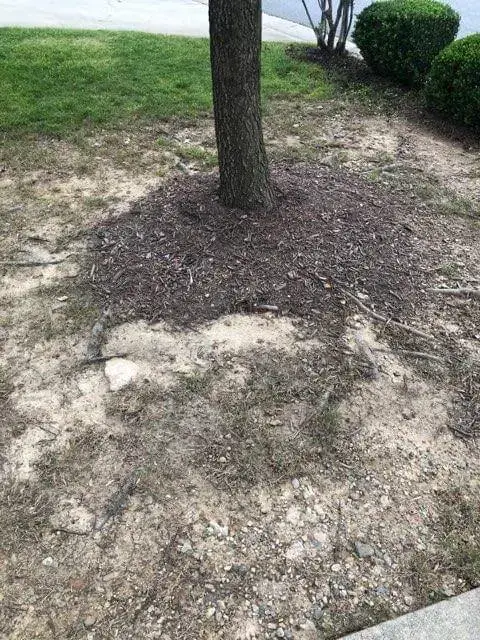
No turfgrass performs well in dense, all- day shade. However, some grasses tolerate reduced light better than others.
| Grass type | Relative shade tolerance | Practical considerations |
| Bermuda | Low | Performs best in strong direct sunlight and commonly thins near trees, buildings, and fences. |
| Hybrid Bermuda | Low to moderate | Cultivars vary, but most still require substantial direct sunlight. |
| Zoysia | Moderate | Some cultivars tolerate filtered light better than Bermuda, but dense shade will still cause thinning. |
| Tall Fescue | Moderate to relatively high | Often the most practical turf option for partial shade in Metro Atlanta, but it remains vulnerable to summer heat and disease. |
Cultivar, mowing height, soil, tree competition, irrigation, and traffic all influence performance. A more shade- tolerant variety is not the same as a shade- loving grass.
Changing grass types may improve an area with moderate shade, but it will not make turf sustainable where little or no direct light reaches the ground.
Observe Before You Replace
As a practical starting point, many lawn areas need approximately six hours of direct sun or a longer period of bright, filtered light. Bermuda often needs more direct exposure, while Fescue and certain Zoysia cultivars may tolerate somewhat less.
Sunlight changes by season. A location that receives adequate spring light before trees leaf out may become heavily shaded by summer. The angle of the sun also shifts, changing shadows from homes, fences, and neighboring trees.
Evaluate the area several times during the day:
Do not count brief, scattered patches of sunlight as full exposure across the entire area.
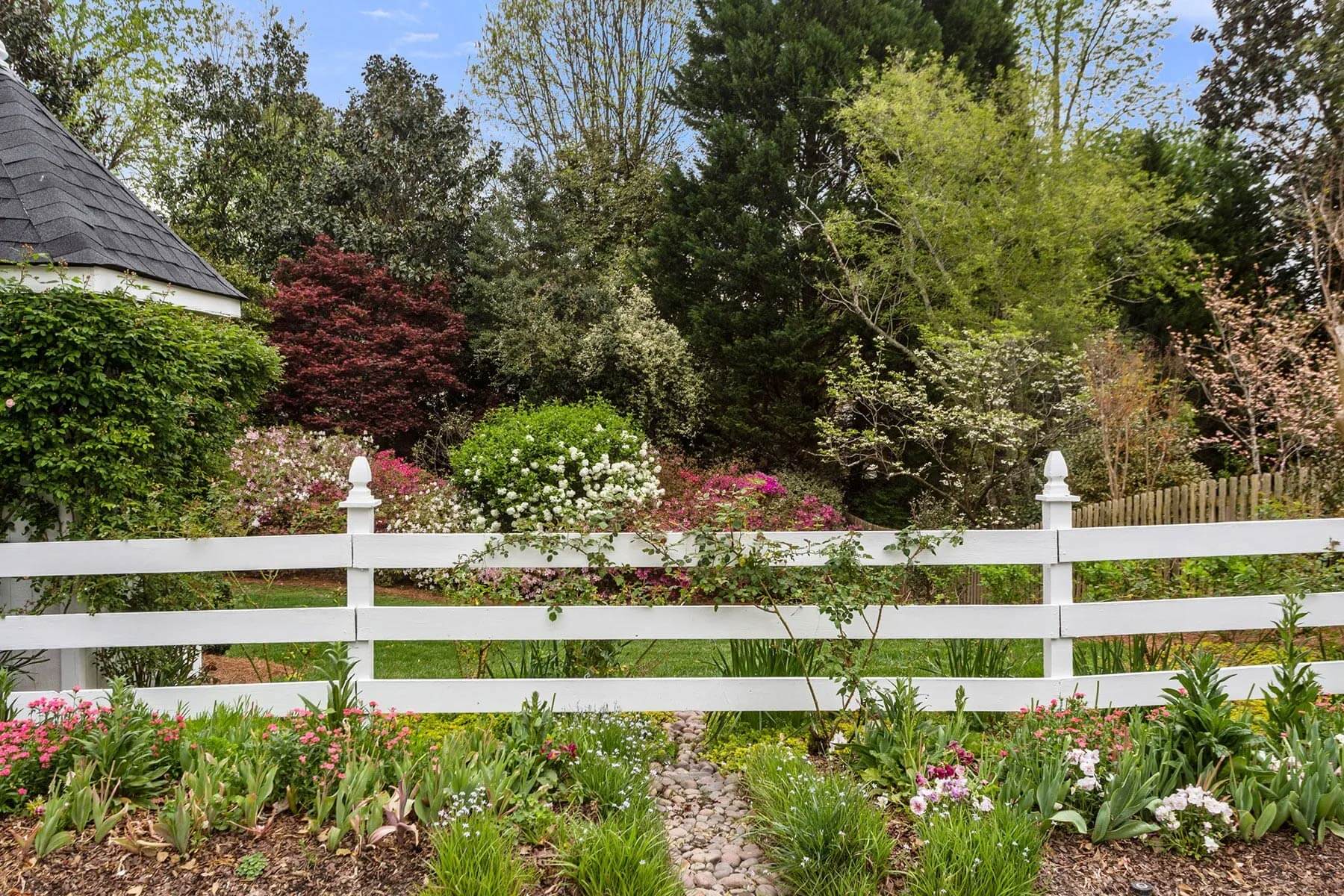
More Than a Light Problem
Grass beneath a mature tree competes with the tree for sunlight, water, oxygen, and nutrients. Dense surface roots can also limit the soil space available to turf. Adding more irrigation may not solve the problem. It can keep shaded foliage wet, increase disease pressure, and create saturated soil. Heavy fertilizer may produce soft, weak growth without replacing the missing sunlight. Avoid cutting or covering major tree roots to create a lawn. Root damage can affect tree health and stability. If pruning may improve light or air movement, consult a qualified arborist. Pruning should protect the tree’s structure, not remove large portions of the canopy simply to preserve grass.
In many cases, a mulched tree zone is healthier for the tree and easier to maintain than struggling turf.

Give Grass a Better Chance
Where shade is moderate rather than dense, these adjustments may improve turf performance:
Expect shaded turf to remain less dense than grass growing in full sun. Even with better maintenance, some areas may never produce the same appearance as the open lawn.
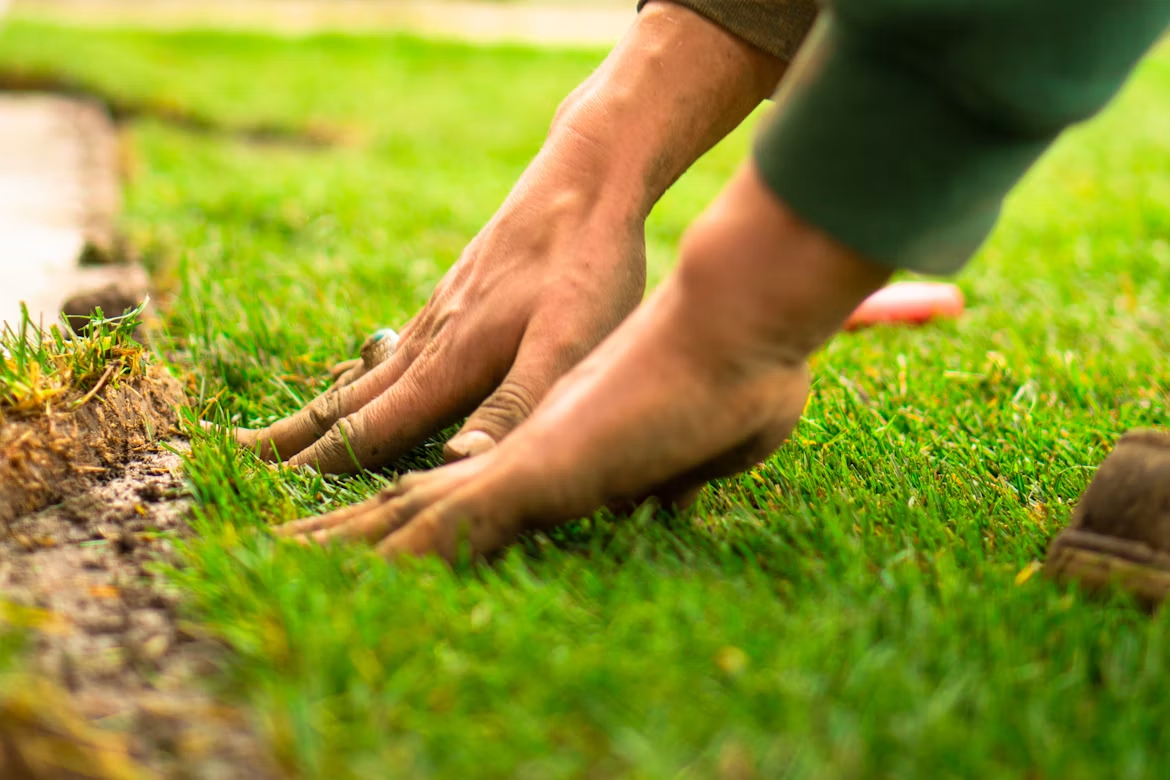
Avoid Repeating the Same Fix
Seed or sod may initially look successful because it contains stored energy or receives intensive establishment care. Once the grass must survive under normal conditions, inadequate sunlight and root competition become limiting factors again. Repeatedly replacing turf without correcting the site can waste time, water, and money. Before installing more grass, ask:
If the underlying answer is dense shade, landscape conversion is usually more reliable than another round of seed or sod.
Design for the Conditions
A lawn does not need turf in every corner. Shaded spaces can become useful, attractive parts of the landscape.
Consider:
Mulched tree beds:
Expand the bed toward the tree’s drip line while keeping mulch away from the trunk. Mulch reduces mower damage, conserves moisture, and removes competition between turf and tree roots.
Shade-tolerant groundcovers:
Depending on drainage and traffic, options may include Mondo grass, ferns, or other plants suited to North Georgia shade. Confirm that a plant is appropriate for the site and is not invasive.
Shade gardens:
Use compatible shrubs and perennials to add foliage, texture, and seasonal color. Match each plant to the site’s moisture, soil, and light.
Stone or stepping paths:
A walkway can turn a worn traffic route into a deliberate landscape feature. Use a design that allows water to drain and avoids damaging major tree roots.
Natural woodland areas:
Where the canopy is dense, leaf litter and carefully managed natural groundcover may be more sustainable than forcing turf to grow.
Choose the Right Next Step
Simply Green can evaluate the grass type, sun exposure, soil conditions, irrigation, and visible symptoms to help determine whether the problem is shade or another lawn issue.
Where sufficient light is available, an appropriate lawn care program may improve turf health and density. Where sunlight is too limited, we will set realistic expectations rather than recommend repeated treatments that cannot correct the site.
For information about turf selection, groundcovers, and shade-tolerant landscape plants, consult the University of Georgia Cooperative Extension and Georgia Turfgrass resources. Use a certified arborist when tree health or structural pruning is involved.