
Metro Atlanta Fescue Lawn Care
Fescue Seeding & Aeration Guide
Use this guide to prepare for your service, understand the aeration and seeding process, and care for new Fescue during its first weeks of growth.
Metro Atlanta Fescue Lawn Care
Use this guide to prepare for your service, understand the aeration and seeding process, and care for new Fescue during its first weeks of growth.
Before You Begin
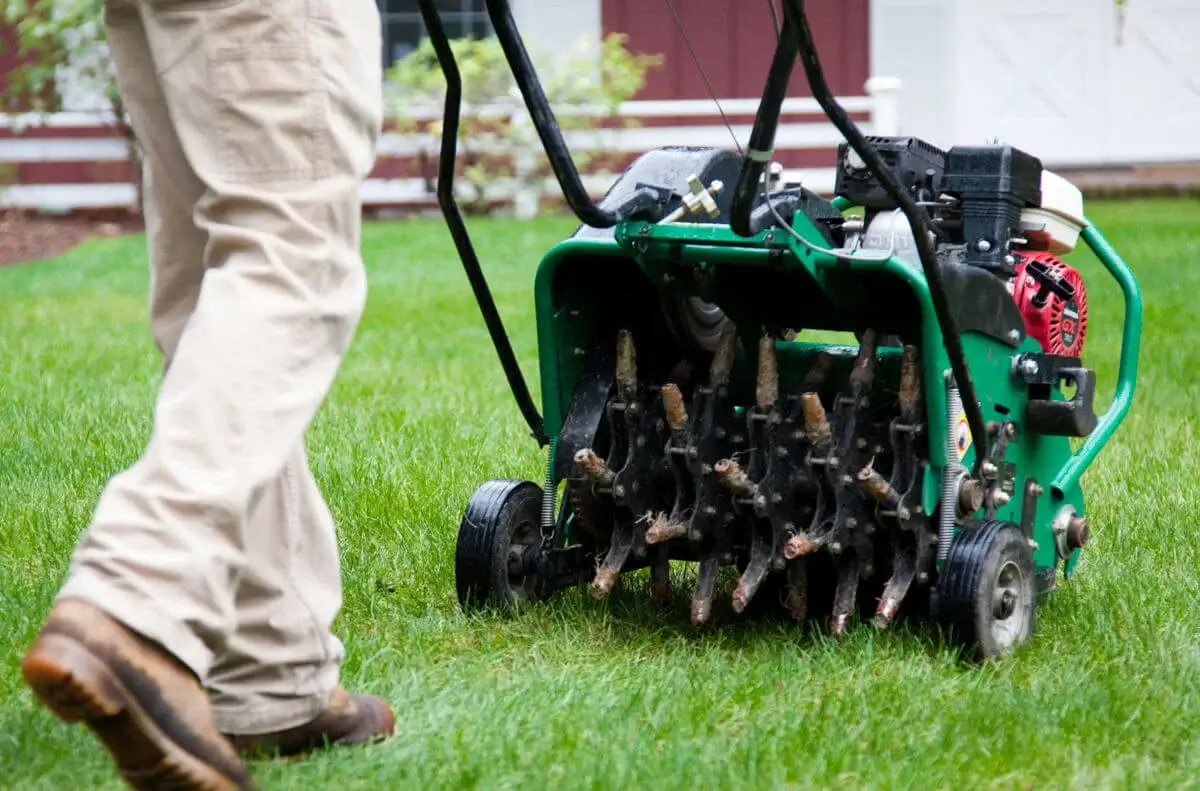
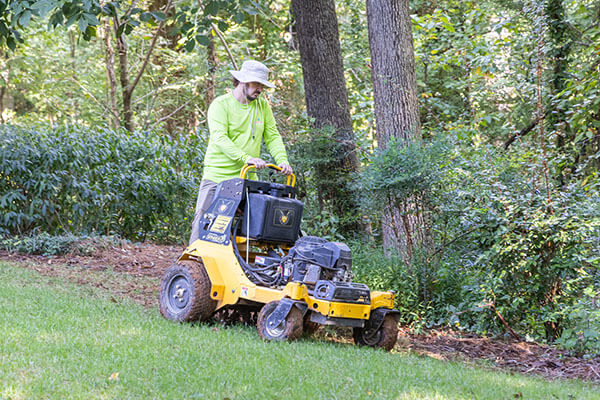
Tall Fescue is a cool- season grass. Metro Atlanta’s summer heat can leave it thin, stressed, or bare, and unlike spreading grasses, Fescue does not quickly repair damaged areas by itself. Core aeration removes small plugs of soil to relieve compaction and improve movement of water, air, and nutrients into the root zone. Seeding introduces new grass, while the aeration holes help create better seed- to- soil contact.
Fall is generally the best time for this work in North Georgia. Cooler air and warm soil give young Fescue time to establish before winter and the following summer.
This guide explains:
Plan for Success
September and October are generally the preferred months for Fescue aeration and seeding in Georgia. Exact timing depends on temperatures, rainfall, soil moisture, and lawn conditions.
Seeding too early can expose seedlings to late- summer heat. Seeding too late gives them less time to develop before cold weather slows growth.
Aeration and seeding may be appropriate when a Fescue lawn:
The service cannot correct every problem. Heavy shade, poor drainage, erosion, irrigation failure, tree roots, or active pest and disease problems may continue affecting the new grass.
Complete these steps before your scheduled service:
Good preparation helps protect the property and allows more seed to reach the soil.
Protect What Is Underground
Core aerators use metal tines that penetrate the soil. Technicians cannot see objects hidden by grass or located just below the surface.
Place a visible utility flag beside each:
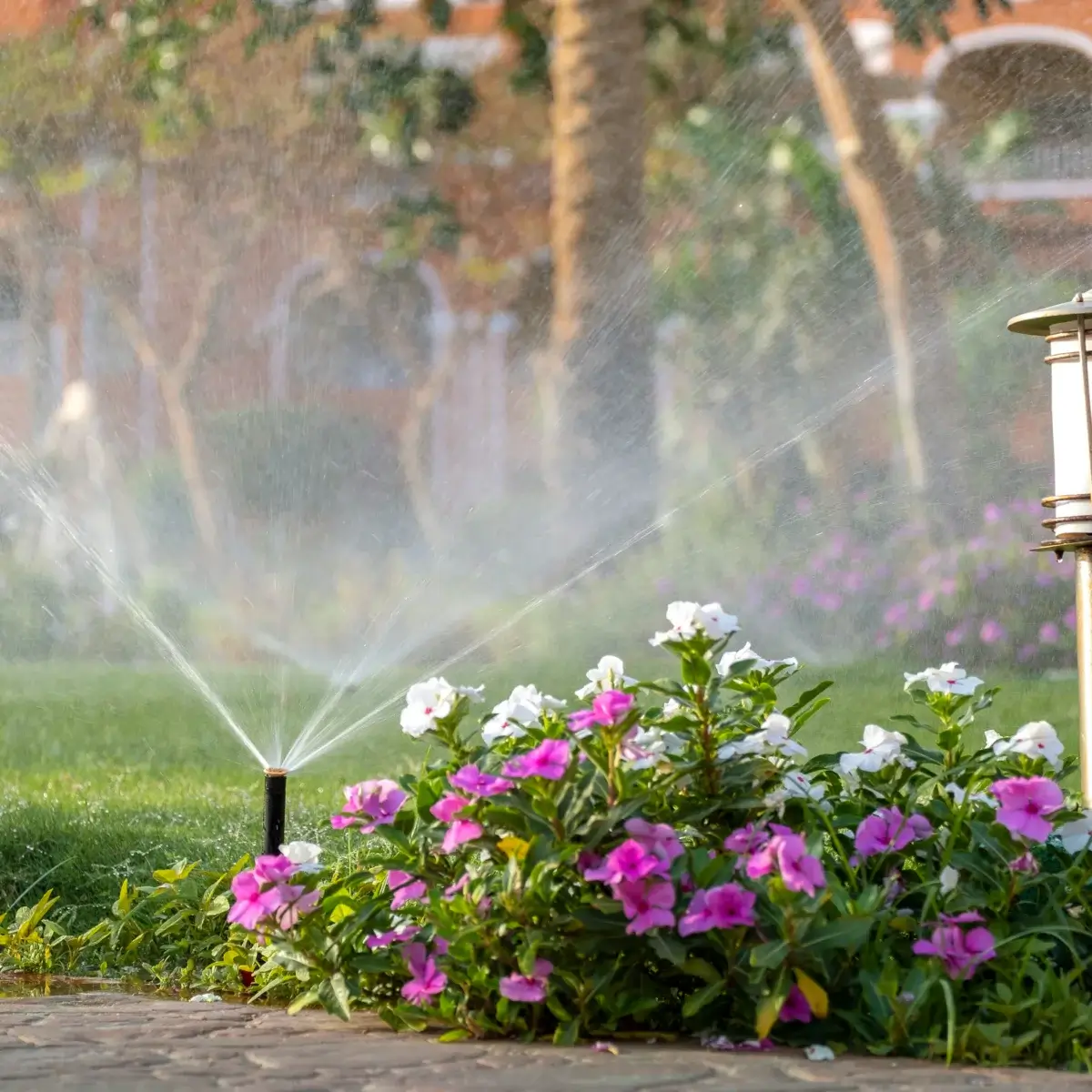
Run your irrigation system before service if that helps locate sprinkler heads.
If you are uncertain about public utility or communication lines, contact Georgia 811 in advance. Private irrigation, lighting, drainage, and pet- fence components may not be marked by 811 and must still be identified by the property owner.
Prepare the Seedbed
Mow the existing Fescue to approximately two inches unless Simply Green provides a different instruction. Bag or remove the clippings so seed can reach the soil. Do not scalp the lawn down to bare ground. The soil should also be moist enough for the aerator to remove plugs. Test it with a screwdriver. If the screwdriver enters with moderate pressure, conditions are likely suitable. If the ground is extremely hard, water before the appointment.
The goal is moist soil, not mud. Avoid unnecessary watering when heavy rain is expected or the ground is already saturated.

The Aeration and Seeding Process
The technician will operate a core aerator across suitable areas of the Fescue lawn. The machine removes small plugs of soil and creates openings throughout the turf.
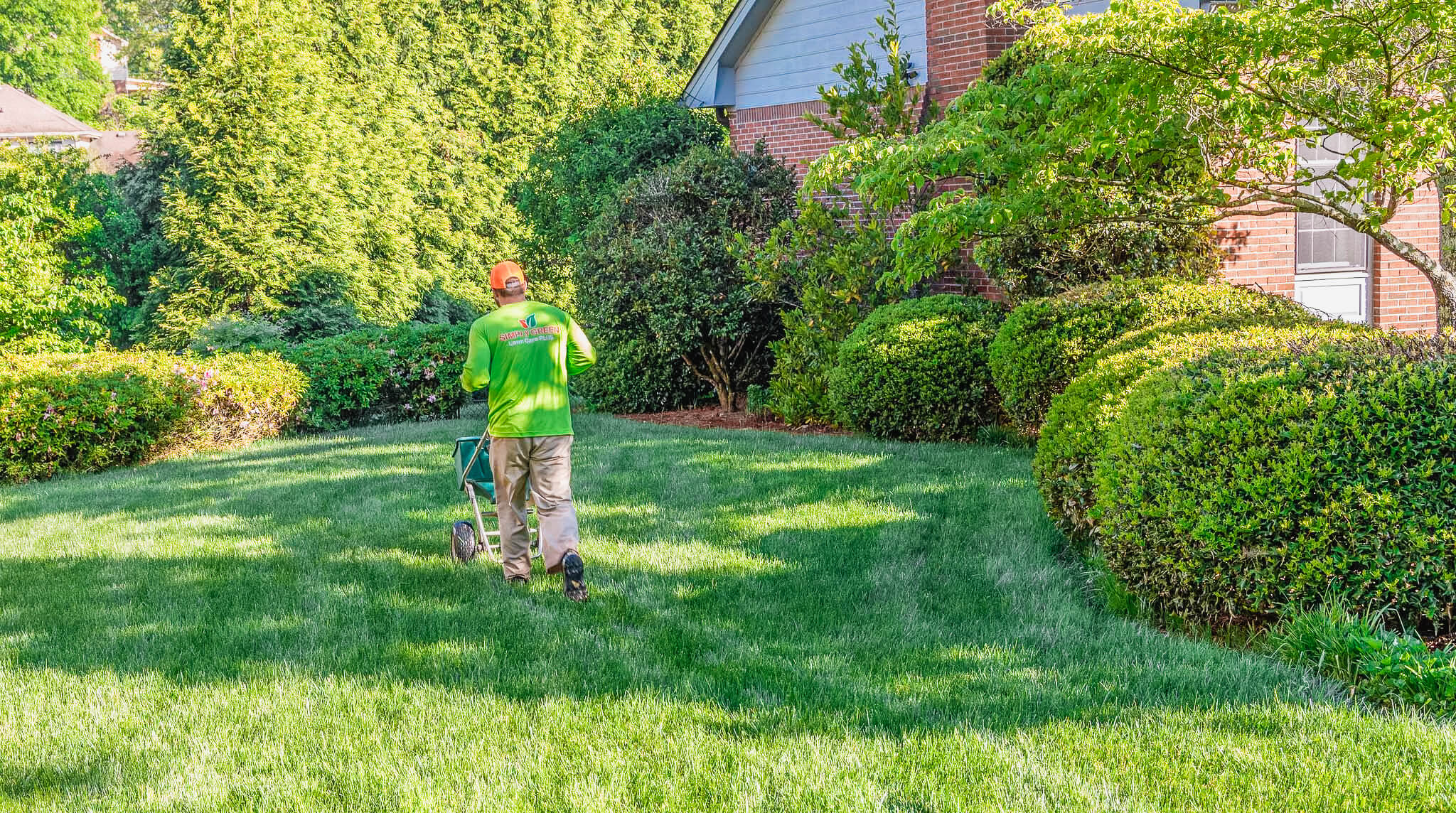
Grass seed is then distributed over the prepared area. Some seed will settle into the holes, while some will remain visible between existing grass plants. This is normal.
After service, expect to see:
Leave the soil plugs in place. Rainfall, irrigation, and future mowing will gradually break them apart and return the material to the lawn.
Rinse or gently blow loose seed and soil from driveways and sidewalks. Avoid washing seed into storm drains.
Essential Post- Seeding Care
Seed needs consistent moisture to germinate. Begin watering on the day of service unless rainfall provides enough moisture.
During germination, keep the upper layer of soil moist without creating puddles, runoff, or saturated ground. There is no single number of minutes that works for every property because sprinkler output, sunlight, slope, wind, drainage, and soil conditions vary.
Apply light water frequently enough to keep the seedbed from drying. Many lawns need one or more short watering cycles each day during dry weather.
As seedlings emerge, gradually reduce watering frequency while applying more water during each cycle. This encourages deeper root development.
Transition toward less frequent, deeper watering based on rainfall and actual soil moisture.
These timeframes are general. Temperature, seed variety, irrigation coverage, shade, and soil contact can make establishment faster or slower.
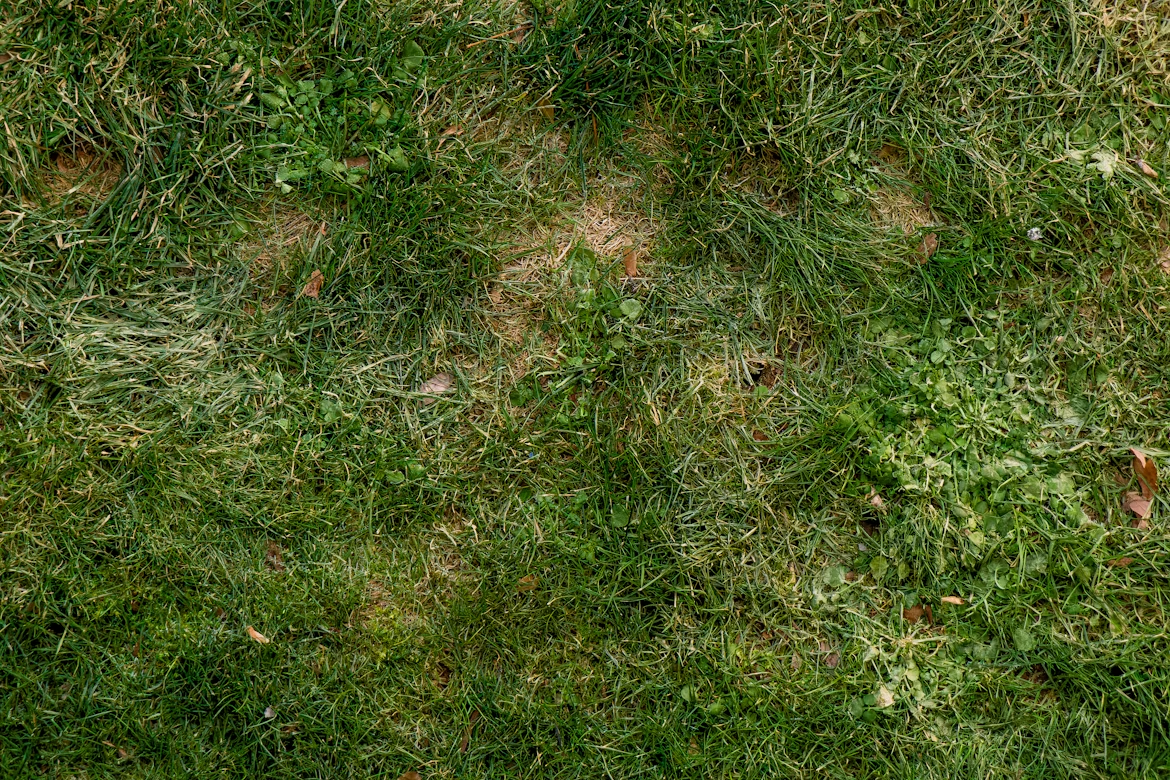
Perfectly even germination is uncommon. Different parts of a yard may receive different amounts of water, sunlight, and seed- to- soil contact.
Uneven growth may result from:
Inspect several areas each day. Give extra attention to dry sections instead of overwatering the entire lawn. Some areas may also germinate later, so do not assume the seeding has failed immediately.
Protect Young Seedlings
Wait until the grass reaches approximately four to five inches, then mow it to around three to three- and- a- half inches.
Protect the Seedbed
Do not allow fallen leaves to cover the seedlings for several days. Use a leaf blower carefully rather than raking, which can disturb seed and young roots. Limit foot traffic, children’s play, pets, and equipment on newly seeded areas. Repeated activity can compact moist soil and damage seedlings.
Be cautious with lawn products. Some pre- emergent herbicides prevent grass seed from developing, and some post- emergent products may injure young Fescue. Do not apply herbicides, fertilizer, fungicides, or insecticides unless the label permits their use during establishment.
If another company treats the lawn, tell both providers what was applied and when.
Understand the Site
New seed needs suitable growing conditions. Fescue may continue struggling in areas with:
An area that fails in the same place every year may need more than additional seed. The better solution could involve irrigation repair, drainage work, soil improvement, pruning, traffic changes, or replacing turf with mulch or another landscape treatment.
When to Ask for Help
Contact our team if:
Large sections remain bare beyond the expected germination period.
The seedbed repeatedly dries despite regular watering.
Water pools or runs off before soaking in.
Seed appears to have washed away.
Young grass suddenly turns brown or collapses.
You notice insects or disease- like patches.
Irrigation does not reach the full lawn.
You are unsure when to mow or adjust watering.
Include the service date, your watering routine, and clear photos. This helps us determine whether the issue is related to germination, irrigation, weather, shade, disease, or another site condition.
Save These Steps
Research-Based Guidance
Simply Green’s residential Fescue aeration and seeding service helps relieve soil compaction, improve seed-to-soil contact, and introduce new growth into thin or stressed turf. Before recommending service, we consider the existing grass, season, property conditions, and likely reasons for thinning. This helps determine whether aeration and seeding are appropriate or whether another lawn, irrigation, drainage, or site issue should be addressed first.