
Metro Atlanta Lawn Health Guide
Types of Lawn Diseases in Georgia
Learn how to recognize common lawn diseases, understand the conditions that encourage them, and determine when brown or thinning grass needs professional attention.
Metro Atlanta Lawn Health Guide
Learn how to recognize common lawn diseases, understand the conditions that encourage them, and determine when brown or thinning grass needs professional attention.
Start With the Cause
Brown patches do not automatically mean a lawn has fungus. Drought, irrigation gaps, dull mower blades, pet activity, herbicide injury, insects, compacted soil, shade, and nutrient problems can produce similar symptoms. Correct diagnosis matters because fungicides cannot repair damage caused by watering, soil, or maintenance problems. Treatment also varies by grass type. Fescue is vulnerable to different diseases and seasonal pressures than Bermuda, Zoysia, Centipede, or St. Augustine grass.
When inspecting a problem, note:
Following appropriate lawn maintenance practices can reduce disease pressure, but established or recurring problems may require professional diagnosis.
Similar Name, Different Turf
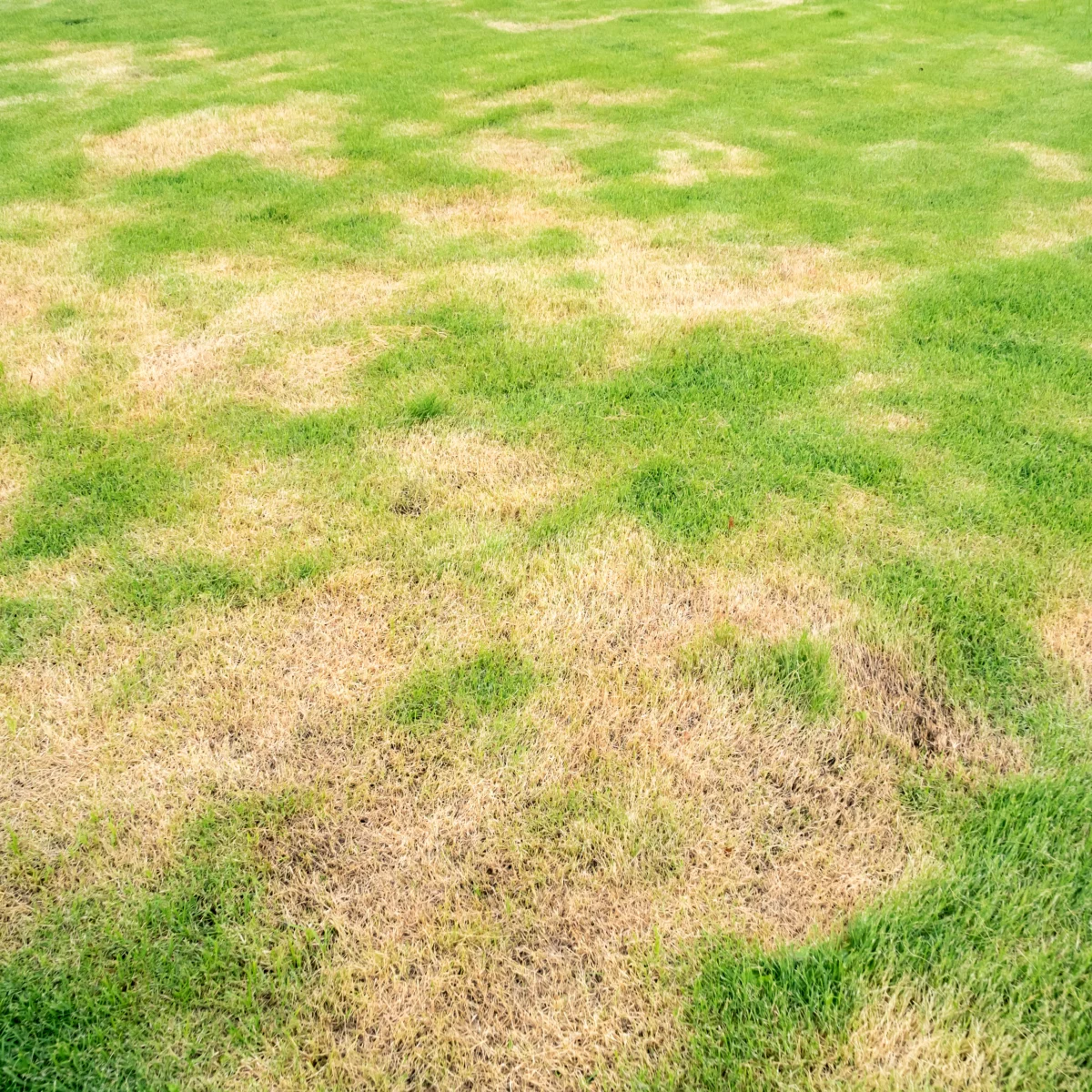
Brown Patch commonly affects Tall Fescue during warm, humid weather, creating irregular yellow, tan, or brown areas. Reduce prolonged leaf wetness, evening irrigation, excessive nitrogen, and other conditions that increase disease pressure. Learn More.
Large Patch affects warm-season grasses during cool, wet periods, producing expanding circular patches with yellow or orange edges. Better drainage, controlled irrigation, proper fertilization, and thatch management can help limit recurring damage. Learn More.
Dollar Spot creates small, straw-colored areas and pale blade lesions with reddish-brown borders. Proper irrigation, aeration, thatch control, and grass-specific fertilization can reduce conditions that encourage outbreaks. Learn More.
Lawn Rust produces orange, yellow, or reddish spores that can leave a dusty residue on shoes, pets, and equipment. Improving sunlight, air circulation, mowing practices, and confirmed nutrient deficiencies can support recovery. Learn More.
Leaf Spot causes dark lesions before progressing into crowns and roots, where severe infection can rapidly thin the turf. Water early, avoid mowing wet grass, maintain the proper mowing height, and manage excessive thatch. Learn More.
Pythium Blight spreads rapidly through dense, wet turf during hot and humid weather, causing greasy, matted, or water-soaked patches. Avoid mowing infected grass while wet, improve drainage and airflow, and irrigate early in the day.
Pythium Root Rot damages turf roots, resulting in yellowing, thinning, weak growth, and poor responses to water or fertilizer. Improving drainage, reducing compaction, and obtaining an accurate diagnosis are essential because its symptoms resemble other root problems.
Spring Dead Spot affects Bermuda grass, leaving circular brown areas during spring green-up that may return and expand each year. Fall prevention, balanced fertility, improved drainage, and reduced thatch are more effective than treating patches after they appear.
Fairy Ring may produce dark-green circles, dry bands, dead grass, mushrooms, or puffballs as soil fungi break down organic material. Deep irrigation, thatch reduction, wetting agents, and professional evaluation may be needed for persistent cases.
Reduce Favorable Conditions
Disease develops when a susceptible grass, an active pathogen, and favorable conditions occur together. You cannot control the weather, but you can improve how the lawn responds.
Preventive fungicides may be appropriate for lawns with a confirmed history of certain diseases. Timing is important, and products should be rotated when necessary to reduce resistance. Always follow the label.
Know When to Get Help
Request an evaluation when:
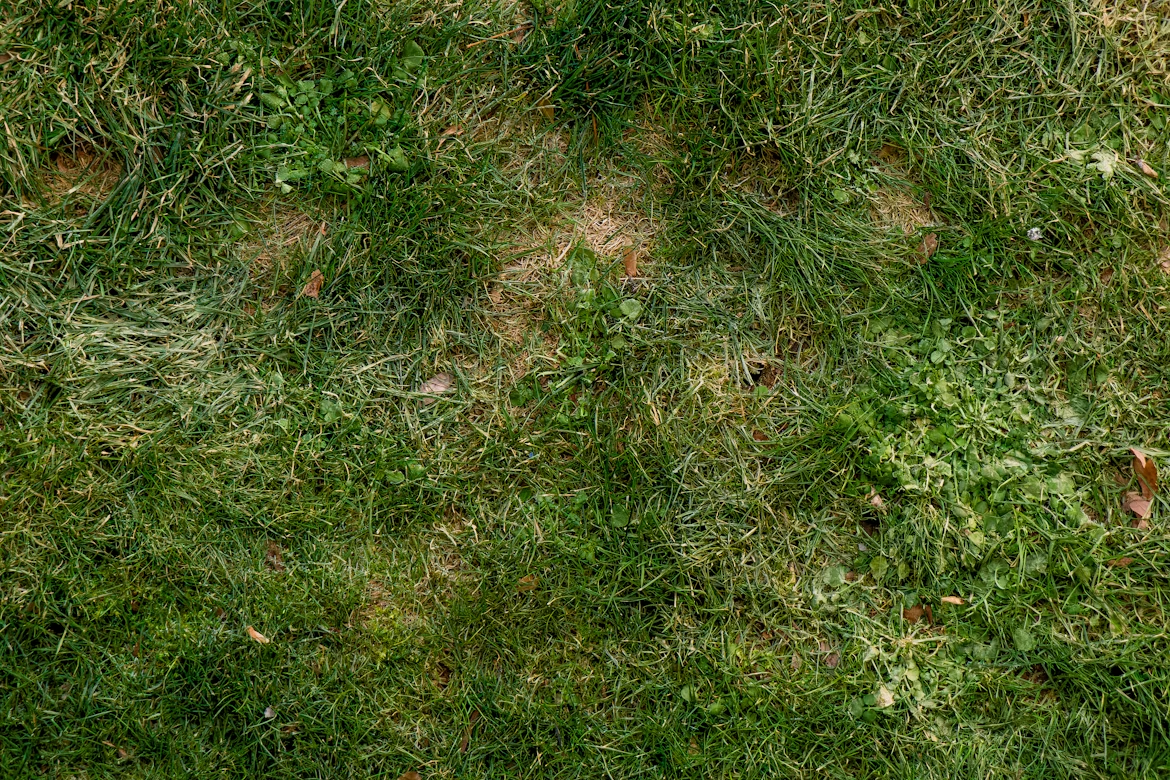
Take photos before mowing or applying another product. Include close- ups of individual blades and wider images showing the pattern across the lawn.
Local Lawn Disease Support
Simply Green evaluates the grass type, symptoms, weather, irrigation, soil conditions, and maintenance history before recommending a response. Depending on the cause, the lawn may need a disease treatment, watering correction, soil improvement, insect control, or time to recover.
Avoid applying a general fungicide simply because the grass is brown. A more accurate diagnosis leads to a more useful treatment plan.
For additional disease information and current management guidance, consult the University of Georgia Cooperative Extension and Georgia Turfgrass resources. Always follow the current product label when using a fungicide.